Walk through a woodland in spring and you might be lucky enough to find yourself surrounded by a drifting stream of blue — bluebells flowing between ancient trees like a river over cobbles settled on the woodland floor.
Bluebells have made their way into our collective hearts and remain one of Britain’s most familiar spring sights. But look a little closer, and the story becomes more complicated.
Among our native bluebells grows another being - the Spanish bluebell.
One belongs to our woodlands of old and is sign that you are in sacred place: an ancient woodland.
The other is a subtle encroacher, able to grow in soils both old and new.
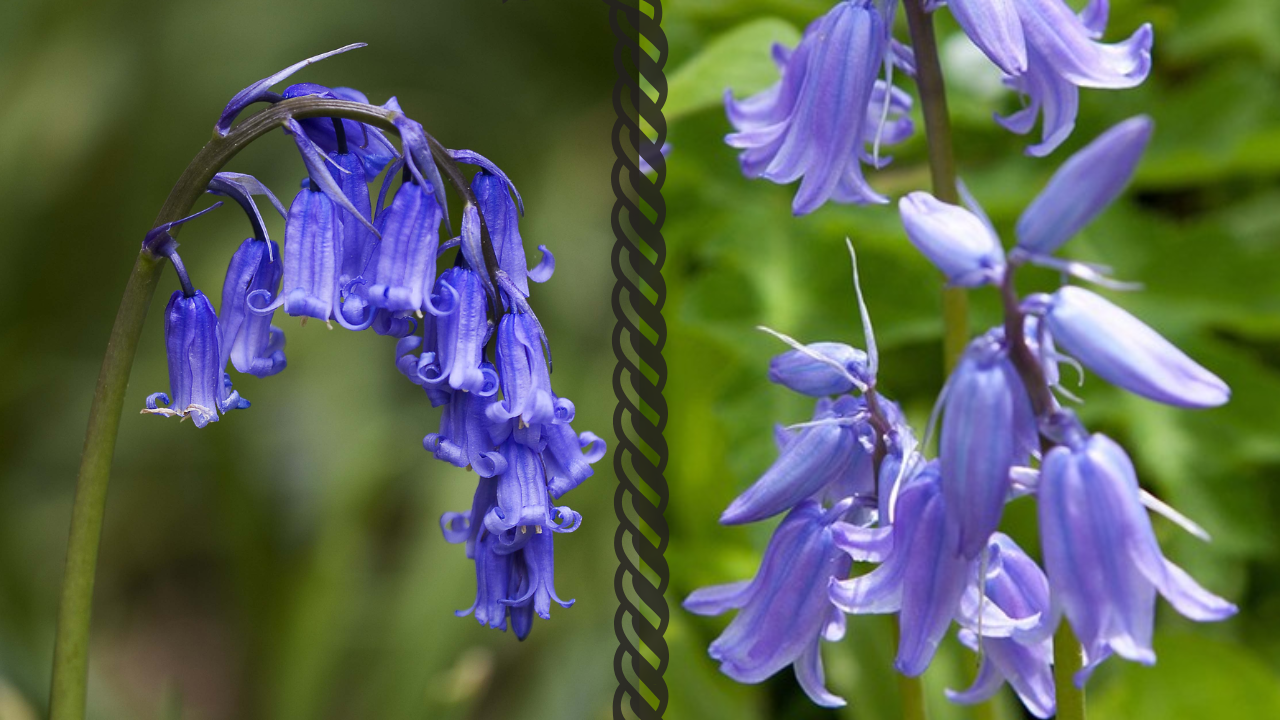
As the name hints, the Spanish bluebell is not native to our little island. It arrived during the great plant-collecting enthusiasm of the Victorian era, when gardeners eagerly sought plants from across Europe and beyond to fill their grand garden estates - as a sign of prestige and to show off. By 1909, the first record appeared of a Spanish bluebell escaping the garden wall and venturing into the wild.
More than a century later, they are now a familiar presence. Spanish bluebells can be found along roadsides, in parks and gardens, and increasingly in woodlands too. In fact, a study by Plantlife found that one in six broadleaved woodlands now contains Spanish bluebells.
And it is in woodlands where the contention lies - with our native common bluebell and our ability to find the increasingly rare and sacred places known as ancient woodlands.
At first glance the two can seem almost identical. But the woodland reveals its secrets to those who pause and look a little closer.
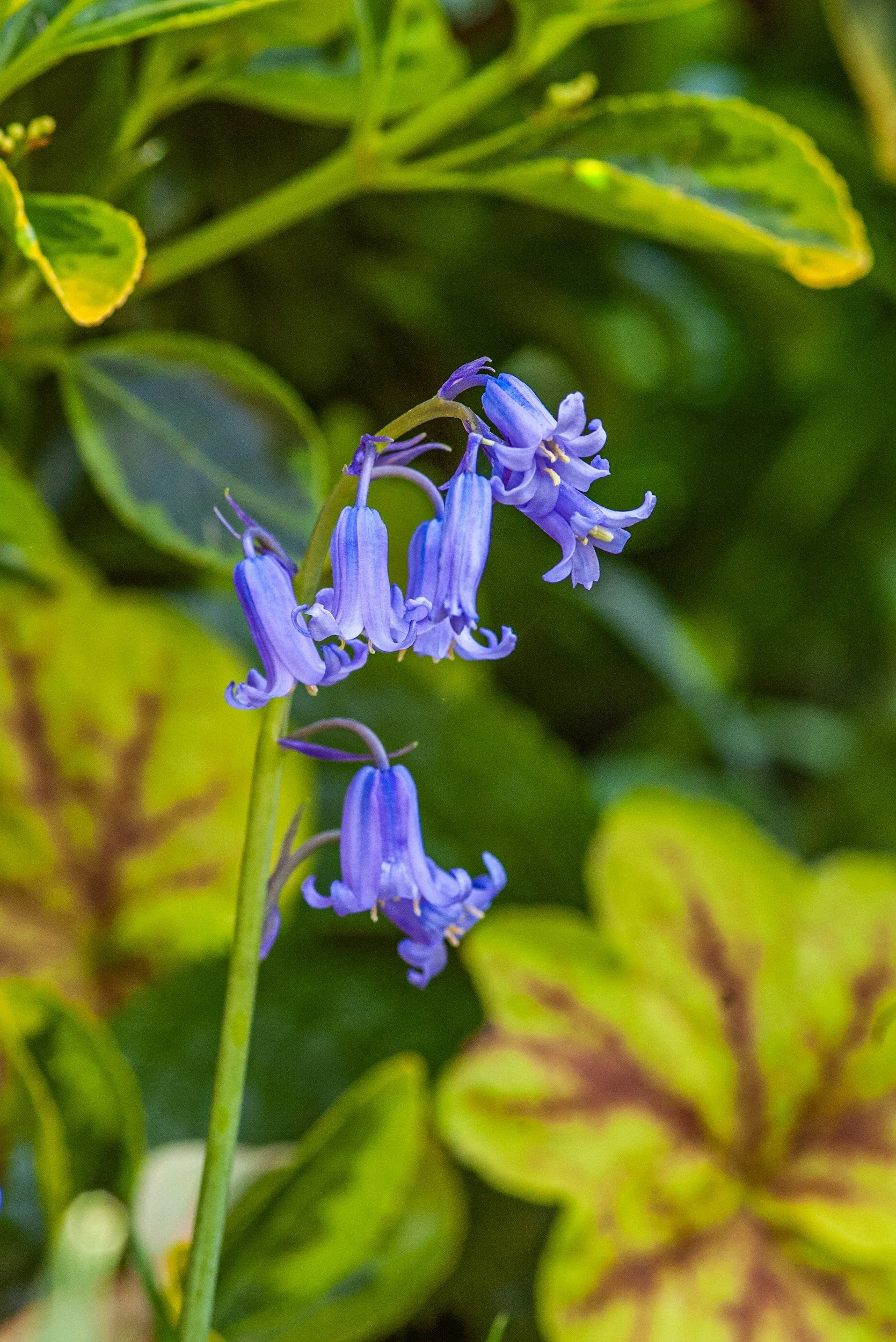
Common or Narive Bluebell
The Bulebell that belongs to our woodlands of old and is sign that you are in sacred place: an ancient woodland.
What to look for:
Narrow leaves (around 1–1.5 cm wide)
Deep violet-blue flowers
A graceful arching stem, with bells hanging one side
Creamy yellow pollen sits inside the flower
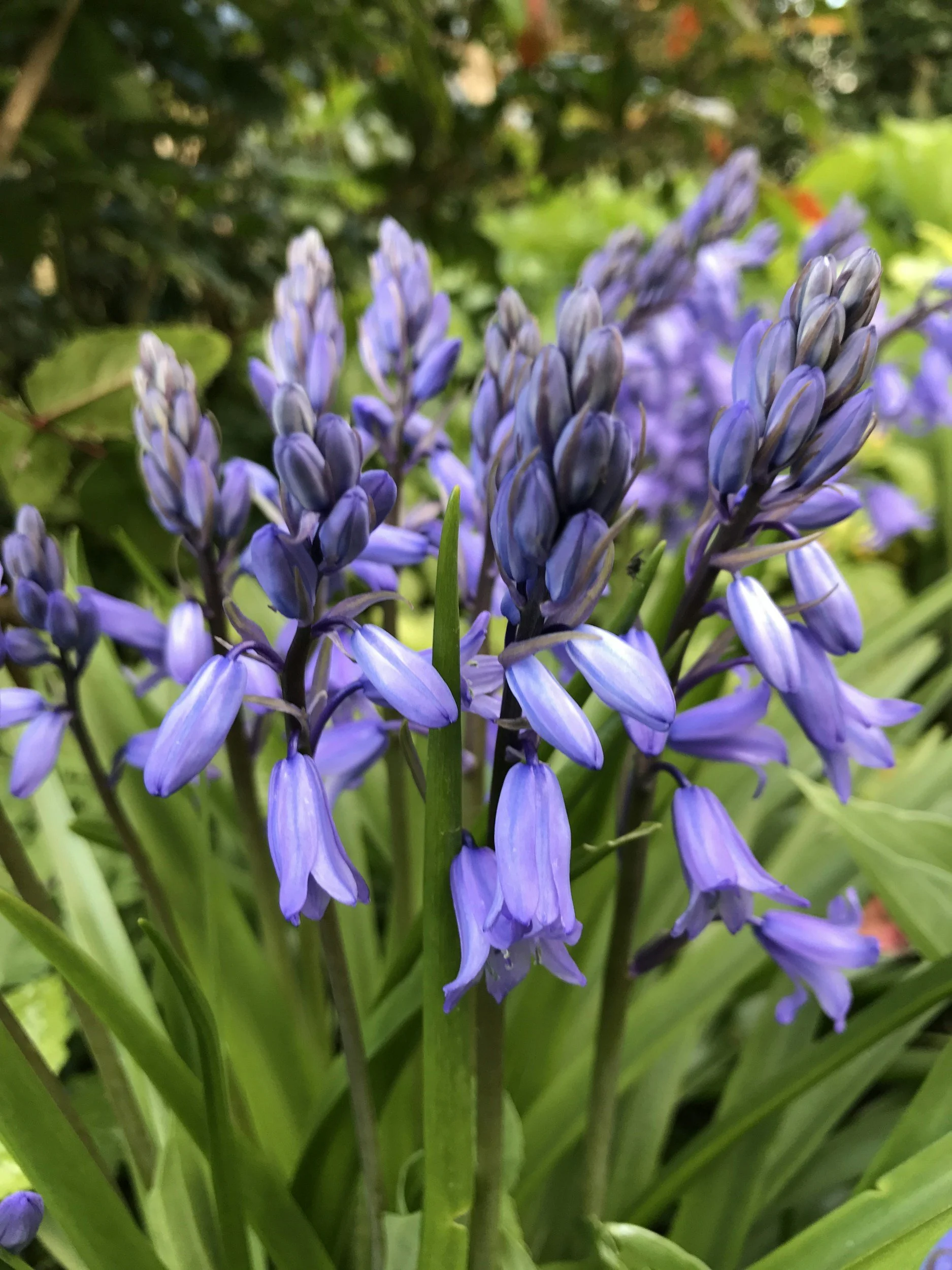
Spanish Bluebell
The subtle encroacher, able to grow in soils both old and new.
What to look for:
Broader leaves (around 3 cm wide)
Paler flowers
Upright stems with flowers arranged on both sides
Blue / pale green-coloured pollen sits inside the flower
Whether the Spanish bluebell poses a serious threat to the native species is still debated. I haven’t personally seen strong evidence that it directly outcompetes our native bluebell. What I have noticed in our woodlands, however, is something quieter. The two species can hybridise.
Over time their characteristics begin to blur - the deep blue softens, the elegant drop of the stem straightens, and the clear identity of the native flower slowly fades.
What also fades is our ability to recognise ancient woodland sites - a very rare ecosystem that can take hundreds, if not thousands, of years to form through the continuous cycle of undisturbed death and rebirth.
Spongy, rich soils that have never been ploughed or disturbed by human activity provide a home for bluebells, along with many other spring flowers such as wood anemone and primrose. A fragmentary home of which we only about 2% remain on our islands.
In ancient and semi-ancient woodlands, where bluebells have coloured the forest floor for centuries, I believe removing Spanish bluebells may be justified - not only to preserve our connection to these magical places, but also to protect them as fragile ecosystems. If we lose these plant indicators, we risk opening the door for development to steamroll in, and the site could be lost altogether.
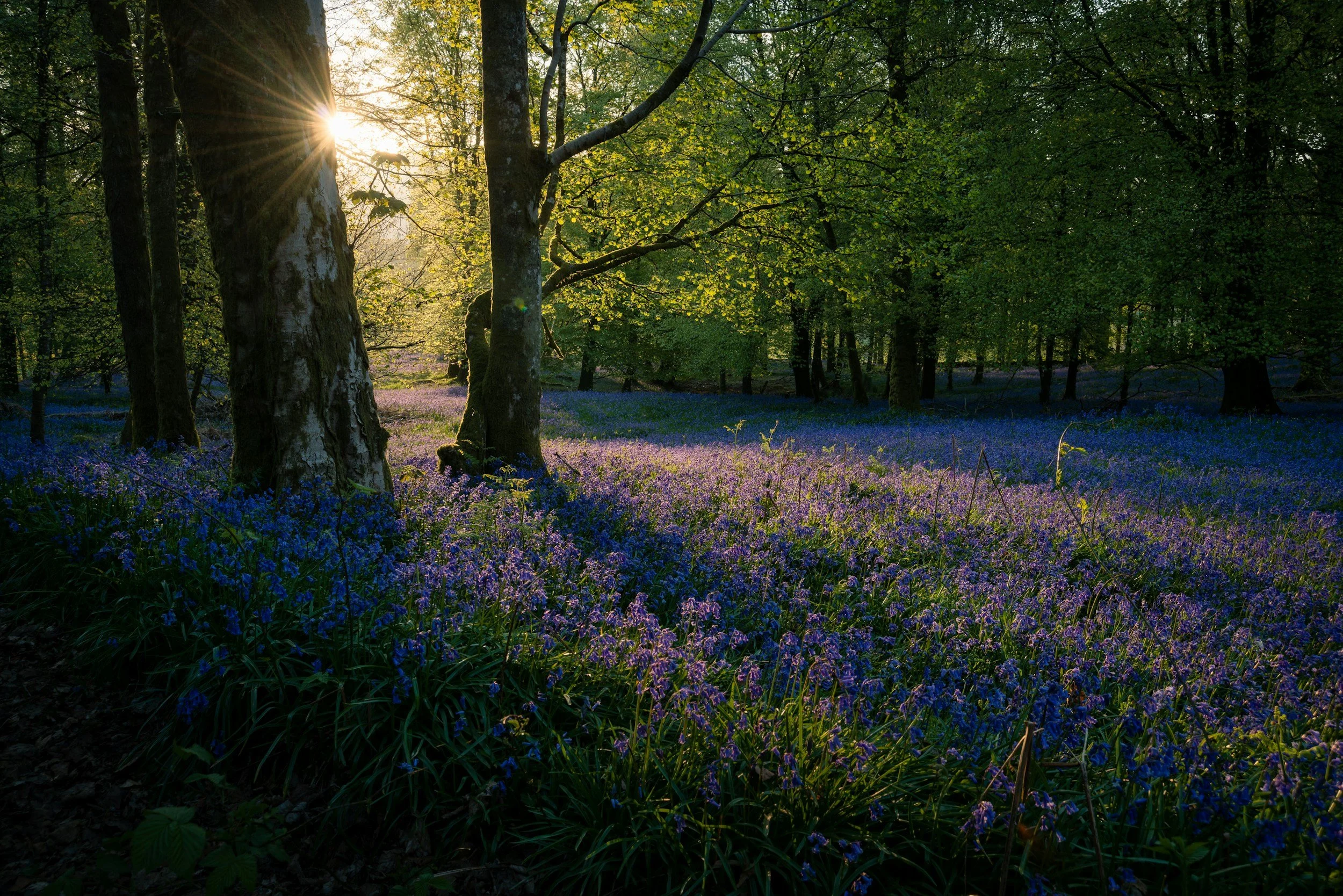
Along roadsides and in parks, however, where the Spanish bluebell is already widespread, I’m less certain what the right approach is.
Nature rarely offers simple answers.
For now, I simply keep watching the woodland each spring — noticing where the deep blue bells gather, and where the paler newcomers begin to appear.
If you pass a bluebell wood on your next walk, pause for a moment and take a closer look. The story of the woodland floor may still be quietly unfolding.
Love and go gently,
Joseph