Ragwort: A Plant Misunderstood - "Community Life Giver painted as a Toxic Weed"
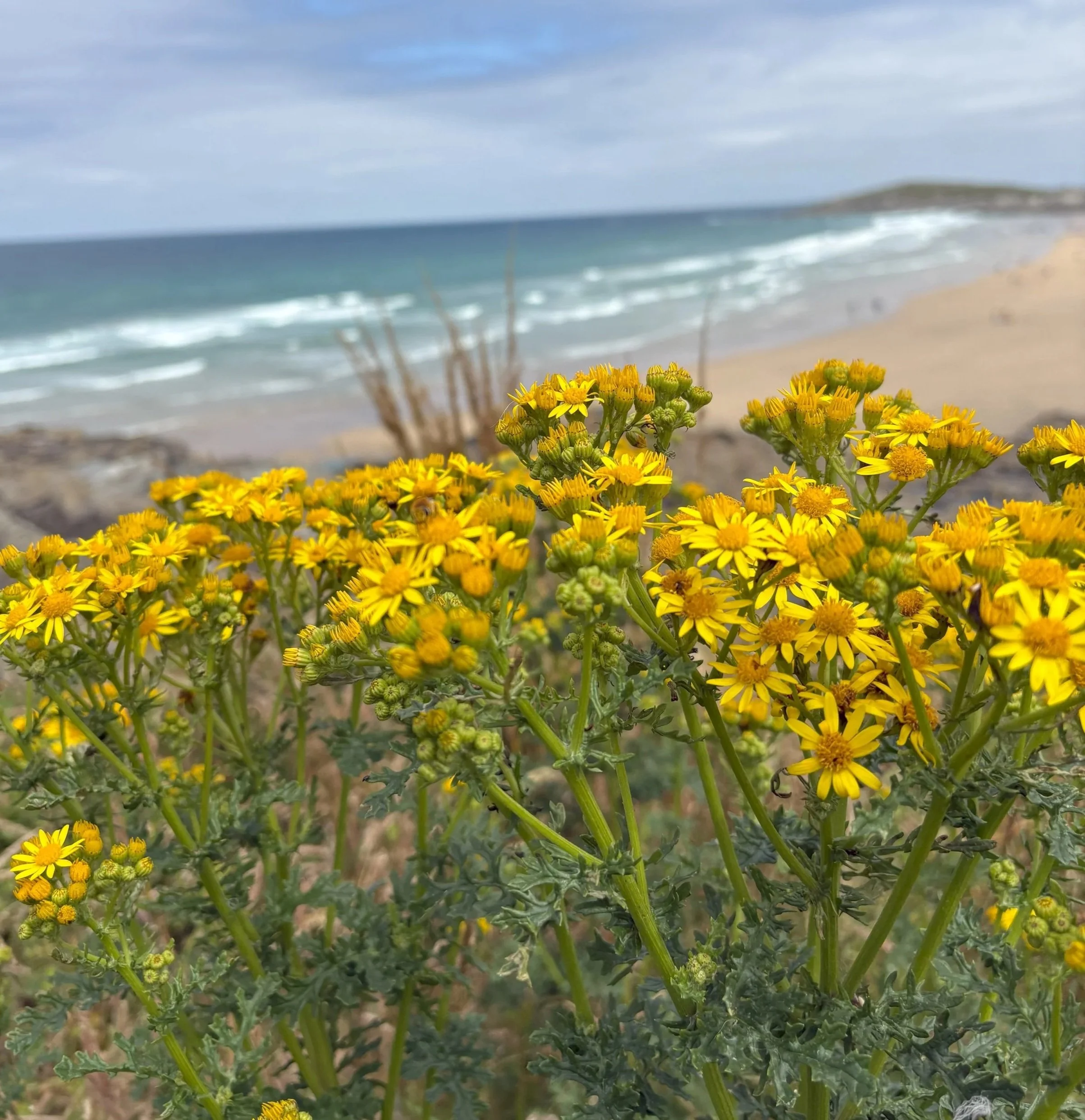
Ragwort is a plant being whose presence has been woven into the lands of Britain for thousands of years. From June until November, their golden, daisy-like flowers illuminate meadows, field edges, and forgotten corners. Far from being a toxic weed - ragwort is one of our most generous plant beings on our isles, providing food and shelter for a community of life to thrive.
At the last count, 178 insect beings were recorded feeding from, living upon, or otherwise relying on ragwort. Twenty-seven of those beings depend entirely upon ragwort for their survival. Among them is the beautiful cinnabar moth, whose story reveals a very different side to the plant we have come to fear.
Yet despite their generous abundance, ragwort has become one of the most misunderstood plant beings on our lands. Since the mid-twentieth century, it has been framed through government legislation and agricultural guidance as an "injurious" or "noxious" weed. With the most recent being ‘The Ragwort Control Bill of 2003’ which over time, the language of danger, toxicity and control has shaped our collective view of this community life giver.
The result is that a plant which feeds entire communities of insects is increasingly treated as an enemy. In some places, this fear has become so great that herbicides are sprayed across ancient meadows and wood pastures in an attempt to eradicate the plant altogether.
Ironically, this fear stems from a truth. Ragwort does contain toxins known as pyrrolizidine alkaloids. These compounds can accumulate in the liver and, if consumed in sufficient quantities, can be fatal to grazing animals. The plant is poisonous. But that fact alone does not explain why conflict between ragwort and livestock has become such a prominent issue.
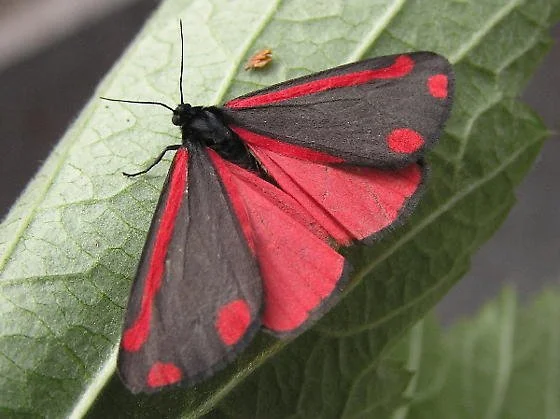
To understand that, we must first return to my friend the cinnabar moth.
The cinnabar moth holds a special place in my heart because it was one of the creatures that first taught me that moths can be every bit as beautiful as butterflies. While butterflies often receive the limelight, the cinnabar moth is no less striking, with vivid crimson red markings set against velvety black wings. Its caterpillar is equally memorable, boldly striped in bands of orange and black.
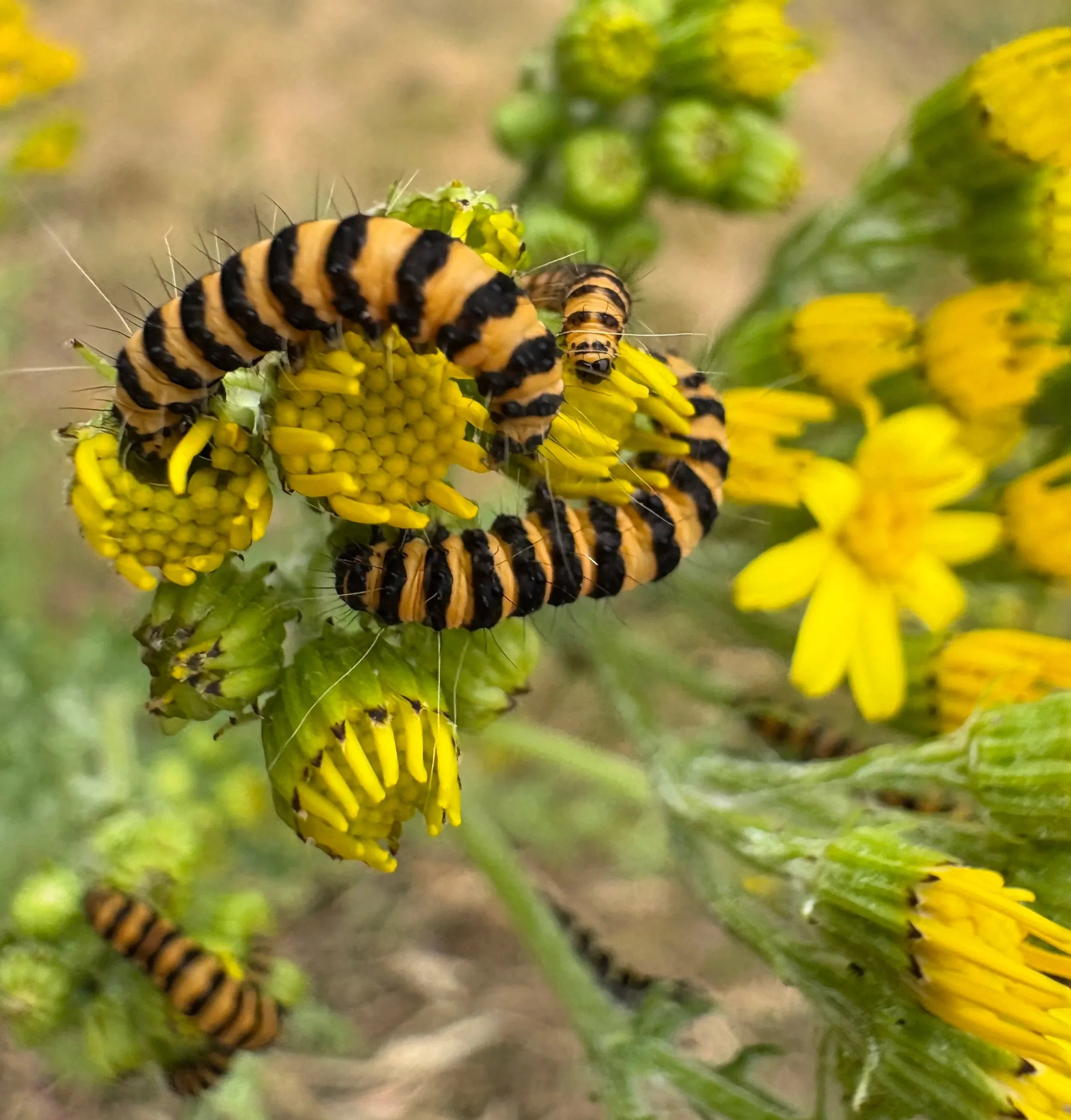
Those bright warning colours of the caterpillar are no accident. They are a message to the wider world: “eat me at your own risk”.
What makes this remarkable is that the caterpillar is not born poisonous. It earns its protection through its relationship with ragwort. A single cinnabar moth may lay hundreds of eggs on the underside of ragwort leaves. Once hatched, the caterpillars spend months feeding voraciously on the plant, gradually accumulating its toxins within their own bodies. The poison that protects them is borrowed from ragwort itself.
This relationship is just one example of the intricate web of connections that surround the plant.
Cows and horses, however, do not share the cinnabar caterpillar's appetite or ability to process ragwort's toxins. If they consume large quantities, serious liver damage can occur. This reality sits at the root of much of the fear surrounding ragwort.
Yet when a long-standing relationship in nature suddenly appears to break down, it is often a sign that something else has changed.
Ragwort is native to the British Isles. In ecological terms, this means it has been present here since the end of the last Ice Age, long before the arrival of modern agriculture. For thousands of years, grazing animals and ragwort have shared this landscapes. They evolved alongside one another and grew up together on the land. They know one another. The plant advertises its toxicity through both smell and taste, earning nicknames such as "stinking willy." Grazing animals instinctively avoid it, just as most of us instinctively avoid foods that taste bitter or unpleasant.
If livestock are increasingly consuming ragwort, the question is not simply what is wrong with the plant.
The more important question is: what has changed in the landscape around them?
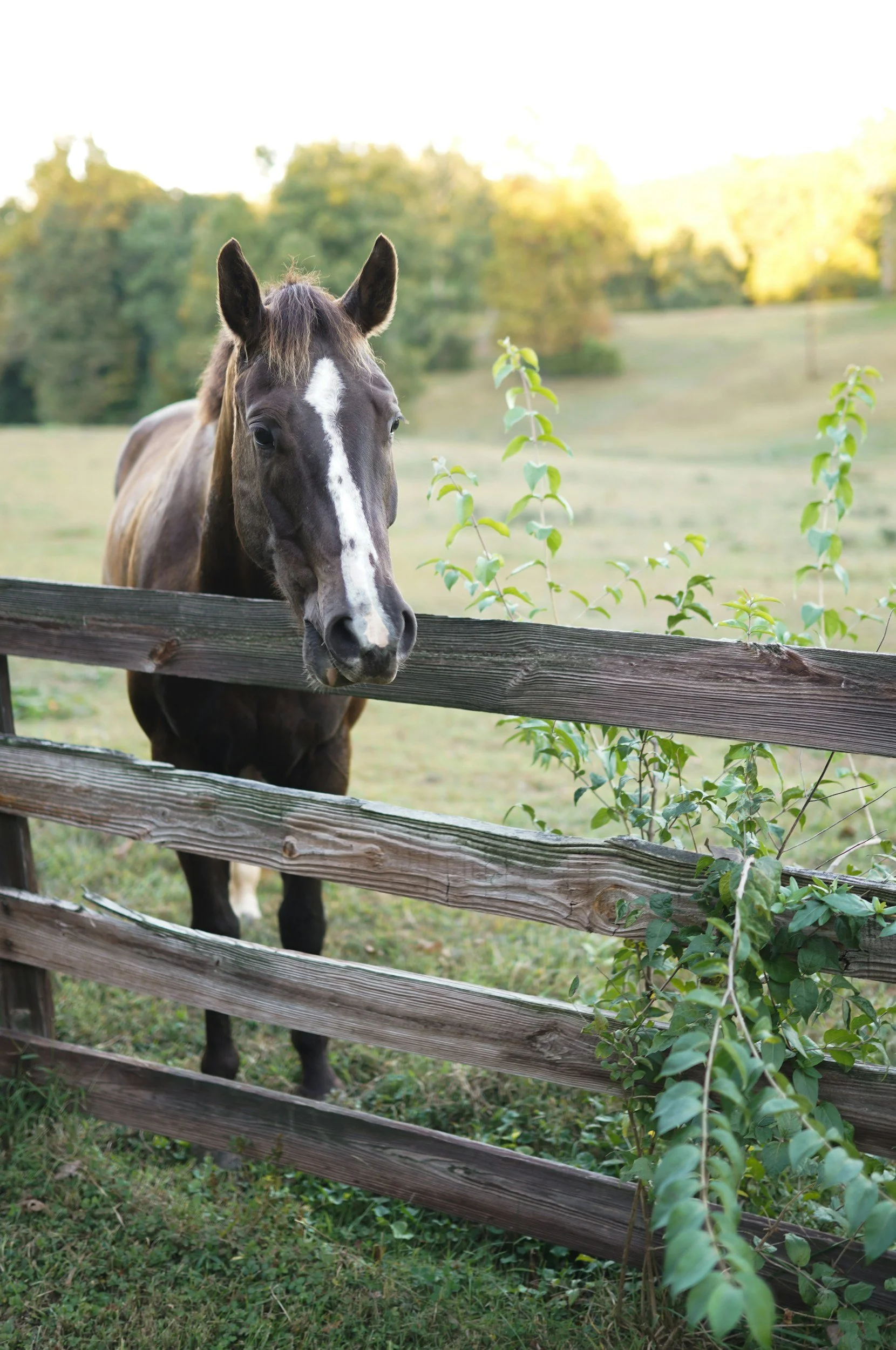
Modern farming has altered ragworts and large herbivores relationship in profound ways.
Historically, grazing animals could roam across varied habitats, selecting from a diversity of plants. Today they are often confined to fenced fields, with fewer opportunities to move elsewhere when food becomes scarce. In heavily grazed pastures, animals may occasionally be pushed beyond their natural preferences and consume plants they would ordinarily avoid.
Ironically, overgrazing also creates ideal conditions for ragwort. The plant thrives in disturbed ground and readily colonises bare patches of soil exposed by intensive grazing. In this sense, ragwort often acts as an indicator species, revealing that a field has been opened up through disturbance.
Yet these situations are relatively uncommon. Most farmers and landowners care deeply for their animals and manage their land responsibly. The majority of fatal ragwort poisonings occur through a different pathway altogether and normally during the winter months when Ragwort has long gone to rest for the year?
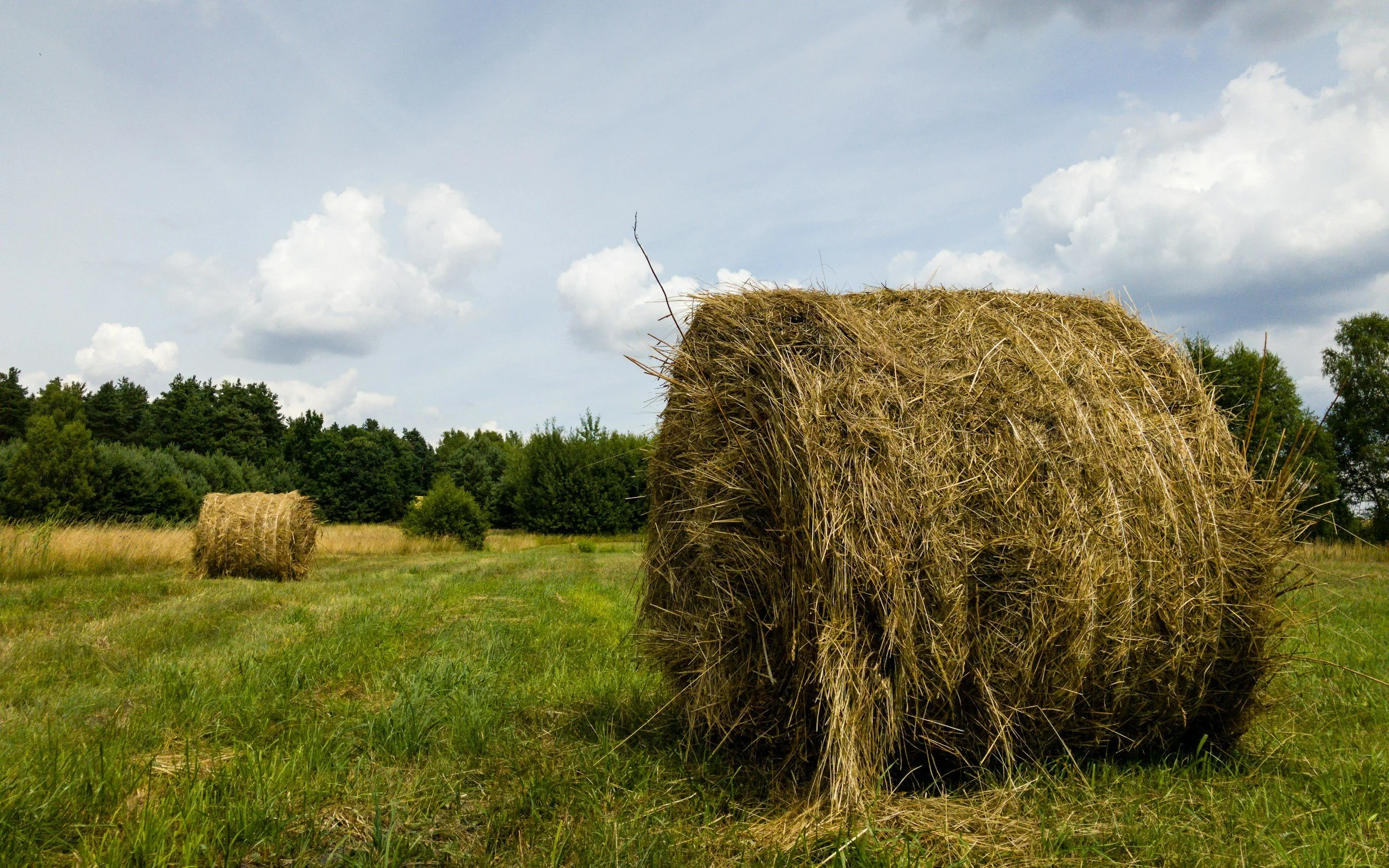
The problem often begins when hay is made.
For centuries, hay cutting has been an important part of meadow management. When carried out thoughtfully, it can support wildflower diversity and help maintain species-rich grasslands. However, if ragwort is cut and baled alongside grasses and other herbs, something important changes.
Fresh ragwort is usually avoided by livestock because of its smell and taste. Once dried within a hay bale, those warning signals largely disappear. It appears as any old dried herb that even seasoned herbalist would struggle to tell apart. What remains is a hidden toxin. A poisonous needle in a hay stack as it were.
During winter, livestock fed contaminated hay may consume ragwort unknowingly. In many cases, this is where the greatest risk lies. The issue is not simply the presence of ragwort in the landscape; it is the presence of ragwort within stored winter feeding.
Recognising this changes how we should respond.
If ragwort is growing in fields destined for hay production, it makes sense to remove it before cutting. We created the conditions that allow the problem to arise, and it is our responsibility to manage those conditions with care. In my view, the most appropriate approach is often the gentlest one: people working by hand, removing plants where necessary while causing as little disturbance as possible to the wider ecosystem.
I have spent many summer days doing exactly that alongside volunteer groups. Armed with gloves, pitchforks, cups of tea, and plenty of laughter, we worked together to reduce the risk to livestock while remaining in relationship with the land around us.
Outside of hay fields, however, the picture is different.
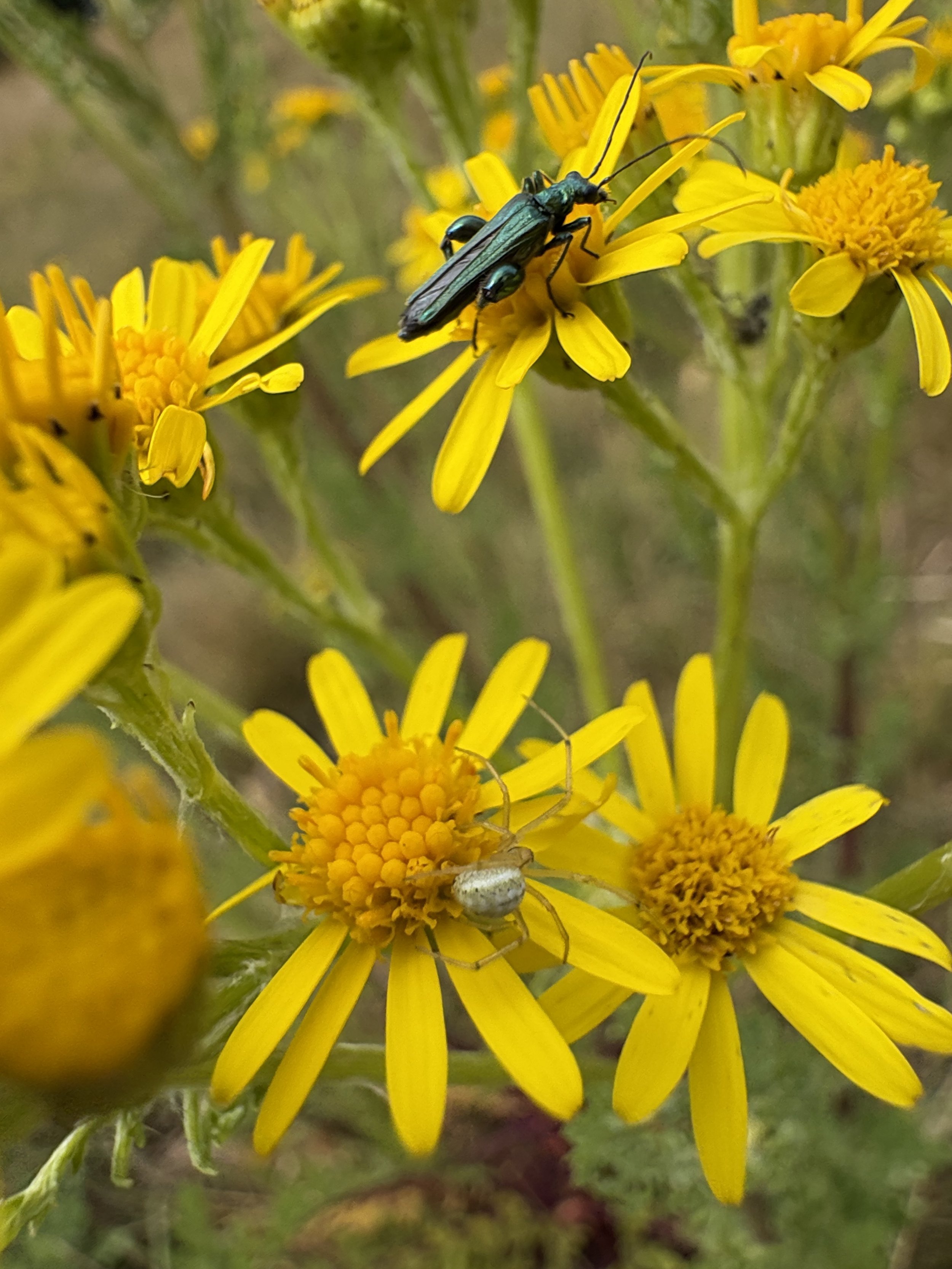
There, ragwort should be allowed to bloom. Allowed to feed pollinators. Allowed to support the dozens of species that depend upon it. Allowed to complete its role within the ecological community. Allowed to take up space.
When ragwort flowers through late summer, it provides vital food for insects at a time when many other nectar sources are fading. Allowing it to remain also supports the life cycle of the cinnabar moth, whose caterpillars feed on the leaves before descending into the soil to pupate and emerge the following year.
Nature already contains countless balancing relationships. More often than not, our role is not to dominate them but to understand them.
Ragwort does not need saving from extinction. It needs saving from misunderstanding.
Where it threatens winter fodder, remove it with care. Where it grows freely in grasslands, field margins, and wild corners, allow it to flourish. Allow the cinnabar moth to complete its life cycle. Allow pollinators a source of food late into the year. Allow a member of this ecological community the space to belong.
Then go and find a ragwort plant. Stand beside it for a few minutes. Look closely. Before long you will notice a beetle, a bee, a moth caterpillar, or one of the many other beings whose lives are entwined with it.
What appears at first to be a weed is, in reality, a thriving community.
Love and Go Gently,
Joseph